💢 AIAG Core Tools Training Course – Automotive Quality Management System (QMS Core Tools)
APQP | PPAP | Control Plan | FMEA | MSA | SPC
Automotive Core Tools Training according to the latest AIAG & AIAG-VDA requirements
In the increasingly competitive global automotive industry, automotive manufacturers and suppliers are required to establish and maintain an effective Automotive Quality Management System (QMS) in accordance with:
- IATF 16949:2016
- AIAG Core Tools Manuals
- AIAG-VDA FMEA
- OEM Customer Specific Requirements (CSR)
Today, most global OEMs and Tier 1 suppliers require organizations to effectively implement the:
AIAG Core Tools
as a mandatory foundation for:
- product quality assurance,
- process capability control,
- defect prevention,
- risk management,
- and continuous improvement throughout the product lifecycle.
The Automotive Core Tools are considered:
the fundamental building blocks of an effective Automotive QMS.
These tools include:
✅ APQP – Advanced Product Quality Planning
✅ PPAP – Production Part Approval Process
✅ CP – Control Plan
✅ FMEA – Failure Mode & Effects Analysis
✅ SPC – Statistical Process Control
✅ MSA – Measurement System Analysis
Organizations with personnel who thoroughly understand and effectively apply the Core Tools can:
- improve manufacturing capability,
- reduce quality risks,
- minimize defects and customer complaints,
- satisfy OEM requirements,
- and strengthen competitiveness in the global automotive supply chain.
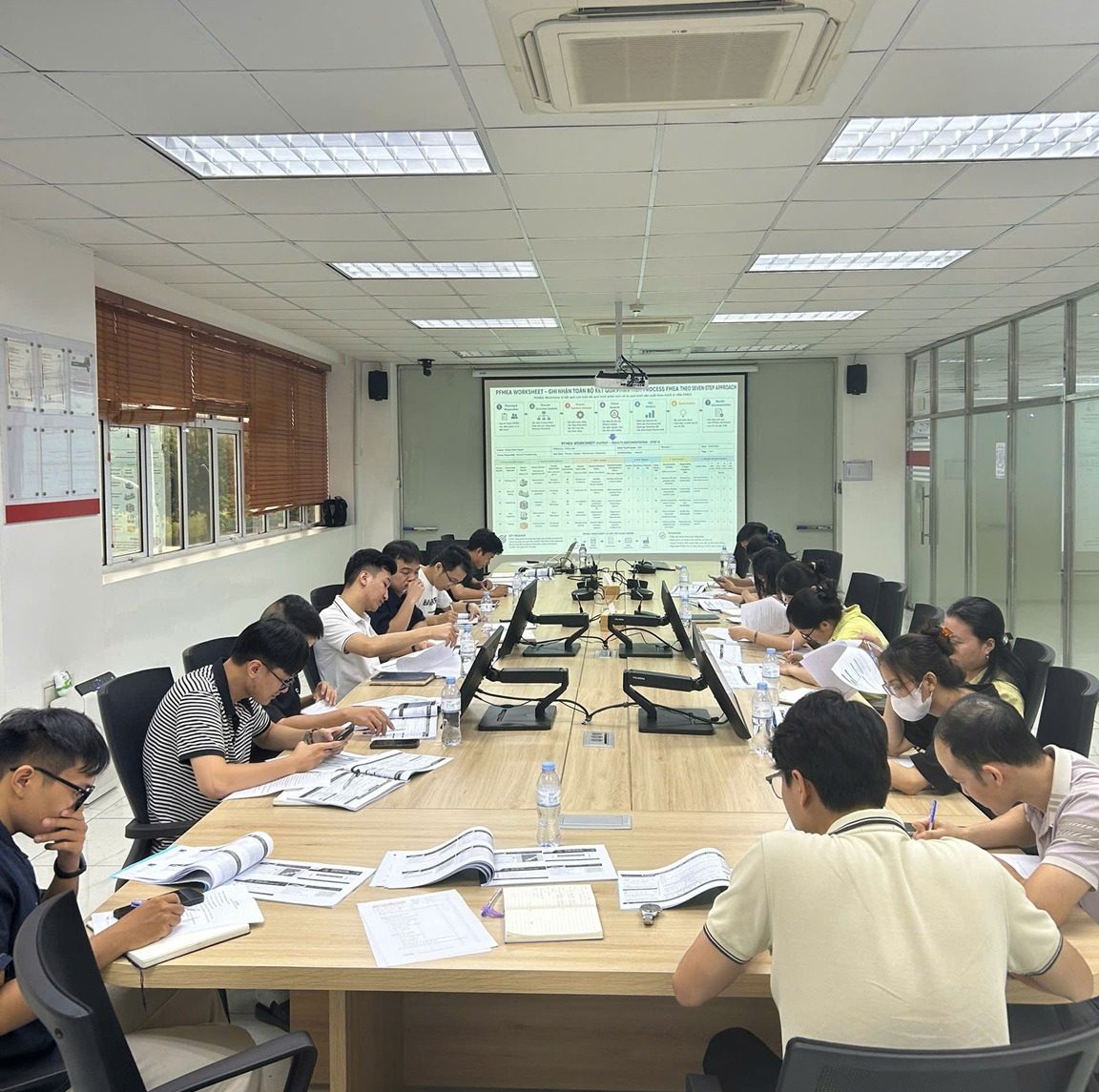
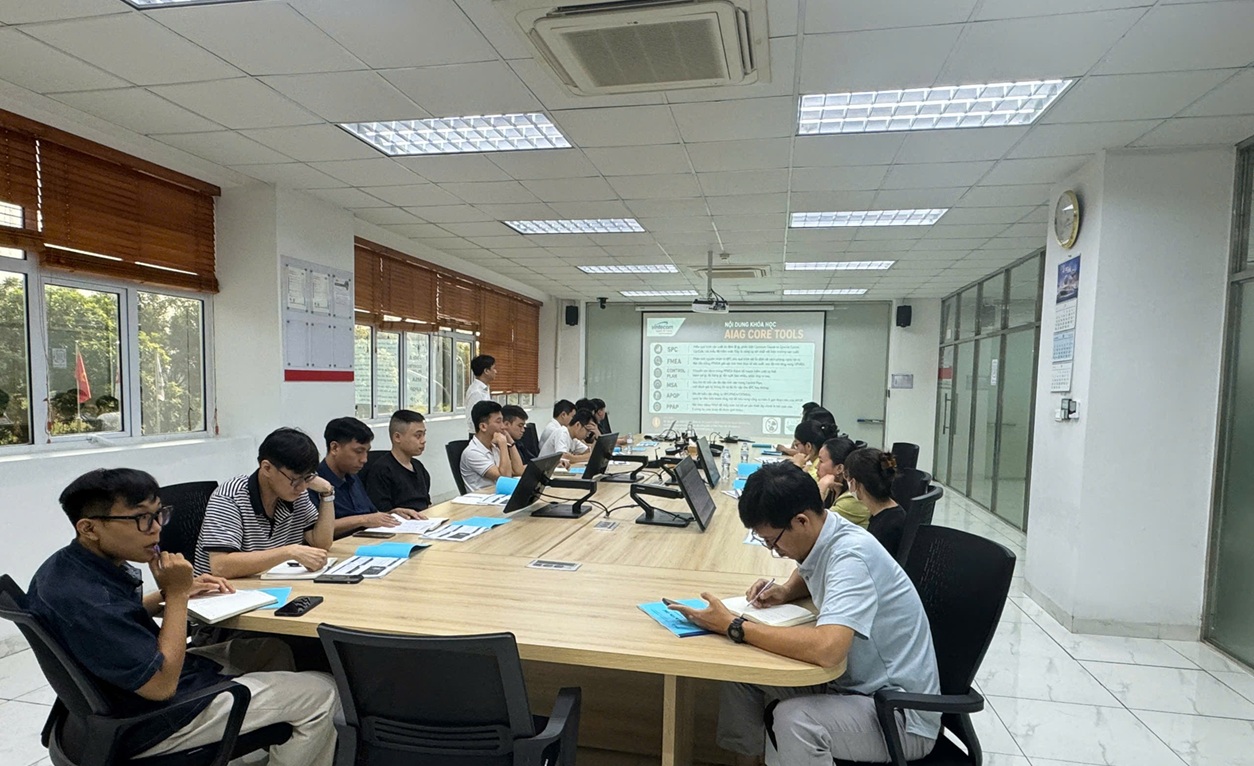 Figure 1. AIAG Core Tools Training (APQP, PPAP, FMEA, Control Plan, SPC, MSA) at DURING VIETNAM
1. ADVANCED PRODUCT QUALITY PLANNING (APQP)
APQP – Advanced Product Quality Planning
APQP is a structured methodology developed by AIAG to ensure:
- customer requirements are fully understood,
- product and process risks are identified early,
- and quality is built into the product development process from concept to mass production.
The latest APQP framework emphasizes:
- cross-functional collaboration,
- risk-based thinking,
- product safety,
- change management,
- customer-specific requirements (CSR),
- and lessons learned integration.
The APQP process typically includes:
Phase 1:
Plan & Define Program
Phase 2:
Product Design & Development
Phase 3:
Process Design & Development
Phase 4:
Product & Process Validation
Phase 5:
Feedback, Assessment & Corrective Action
2. PRODUCTION PART APPROVAL PROCESS (PPAP)
PPAP – Production Part Approval Process
PPAP is an industry-standard approval process used to demonstrate that:
- the supplier fully understands customer engineering specifications,
- manufacturing processes are capable,
- and mass production can consistently produce conforming products.
PPAP helps:
- reduce launch risks,
- improve communication between supplier and customer,
- and prevent quality issues during SOP (Start of Production).
Typical PPAP documentation includes:
✅ Design Records
✅ DFMEA/PFMEA
✅ Process Flow Diagram
✅ Control Plan
✅ MSA Studies
✅ SPC Capability Studies
✅ Dimensional Results
✅ Material & Performance Test Results
✅ PSW (Part Submission Warrant)
and other customer-specific requirements.
3. CONTROL PLAN (CP)
Control Plan – Process & Product Control
The Control Plan is a living document used to:
- define process controls,
- identify monitoring methods,
- establish reaction plans,
- and maintain product conformity during production.
The latest AIAG Control Plan approach emphasizes:
- linkage with PFMEA,
- process risk mitigation,
- special characteristics control,
- layered process audit integration,
- and continuous improvement.
Control Plans are commonly developed for:
- Prototype
- Pre-launch
- Production
4. FAILURE MODE & EFFECTS ANALYSIS (FMEA)
AIAG-VDA FMEA Methodology
FMEA is a preventive risk analysis methodology used to:
- identify potential failure modes,
- analyze causes and effects,
- prioritize risks,
- and implement preventive actions before failures occur.
The latest:
AIAG-VDA FMEA Handbook
introduces a harmonized approach widely adopted by global OEMs.
The new AIAG-VDA FMEA method includes:
✅ Structure Analysis
✅ Function Analysis
✅ Failure Analysis
✅ Risk Analysis
✅ Optimization
✅ Results Documentation
The methodology replaces traditional RPN ranking with:
Action Priority (AP)
to improve risk prioritization and decision-making.
FMEA applications include:
- DFMEA (Design FMEA)
- PFMEA (Process FMEA)
- Machinery FMEA
- Monitoring & System FMEA
5. STATISTICAL PROCESS CONTROL (SPC)
SPC – Statistical Process Control
SPC uses statistical techniques to:
- monitor process stability,
- control process variation,
- improve capability,
- and ensure consistent product quality.
SPC tools include:
✅ Control Charts
✅ Process Capability Analysis
✅ Histogram
✅ Pareto Analysis
✅ Trend Analysis
✅ Cp / Cpk / Pp / Ppk Studies
SPC implementation helps organizations:
- reduce variation,
- improve process predictability,
- minimize scrap and rework,
- and achieve stable manufacturing performance.
The latest AIAG SPC practices emphasize:
- real-time monitoring,
- digital manufacturing integration,
- data-driven process improvement,
- and risk-based process control.
6. MEASUREMENT SYSTEM ANALYSIS (MSA)
MSA – Measurement System Analysis
MSA evaluates the quality and reliability of measurement systems used in manufacturing and inspection processes.
Accurate measurement systems are critical because:
poor measurement data leads to poor decisions.
MSA studies commonly include:
✅ Gage R&R
✅ Bias
✅ Linearity
✅ Stability
✅ Attribute Agreement Analysis
The latest AIAG MSA practices focus on:
- digital measurement systems,
- automated inspection technologies,
- traceability,
- uncertainty management,
- and measurement system capability improvement.
Effective MSA implementation helps organizations:
- improve inspection reliability,
- reduce false rejection/acceptance,
- and support data-driven quality decisions.
BENEFITS OF AIAG CORE TOOLS IMPLEMENTATION
Organizations implementing AIAG Core Tools effectively can:
✅ Improve Product Quality
✅ Reduce Defects & Variation
✅ Enhance Process Capability
✅ Improve Customer Satisfaction
✅ Reduce Warranty & Recall Risks
✅ Strengthen Supplier Performance
✅ Meet OEM & IATF 16949 Requirements
✅ Increase Competitiveness in Global Supply Chains
WHO SHOULD ATTEND?
This training course is suitable for:
- Quality Engineers
- Process Engineers
- Manufacturing Engineers
- Supplier Quality Engineers (SQE)
- APQP/PPAP Coordinators
- IATF 16949 Internal Auditors
- Production Managers
- Continuous Improvement Teams
- Automotive Suppliers & OEMs
VINTECOM INTERNATIONAL
Automotive QMS Training & Consulting Services
VINTECOM International provides:
- AIAG Core Tools Training
- IATF 16949 Consulting
- AIAG-VDA FMEA
- CQI Special Process Assessments
- Lean 6 Sigma
- TPM
- VDA 6.x
- PSCR
- Root Cause Analysis (RCA)
- Minitab Statistical Analysis
- Manufacturing Process Improvement
Our trainers and consultants are fully qualified according to VINTECOM International competency requirements, with:
✅ Minimum 10 years of automotive quality management experience
✅ Practical implementation experience in global supply chains
✅ Extensive expertise supporting automotive manufacturers and suppliers
including projects related to:
- BMW
- Mercedes-Benz
- Porsche
- Bosch
- Hyundai
- Samsung
- Canon
- Olympus
- Nidec
- Hyosung
and many global manufacturing organizations.
📶📶📶 Contact us to register for AIAG QMS Core Tools (APQP, PPAP, FMEA, CP, MSA and SPC) Training Course