AIAG QMS Core Tools Training (APQP, PPAP, FMEA, Control Plan, SPC, MSA) at DURING VIETNAM to Enhance Quality Management Competence in Automotive Component Manufacturing for the Global Hyundai Supply Chain
VINTECOM International successfully delivered an AIAG QMS Core Tools training program, covering APQP, PPAP, FMEA, Control Plan, SPC, and MSA, for During Vietnam Co., Ltd., a foreign-invested company under the During Group (South Korea), operating in the manufacturing of automotive components and parts in Vietnam.
In the global automotive supply chain, product quality is not controlled only at the final inspection stage. Instead, quality must be planned, risks identified, controlled, and verified throughout the entire product and manufacturing process lifecycle.
This is the core role of the AIAG QMS Core Tools.
For automotive component suppliers, particularly manufacturers of mechanical parts, cast components, electrical and electronic components, and products with stringent technical requirements, the Core Tools are not six independent tools. Rather, they form an integrated system of methodologies designed to prevent defects and control process variation.
VINTECOM International delivered an in-depth training program covering APQP – PPAP – FMEA – Control Plan – SPC – MSA for the During Vietnam team, with a focus on connecting standard requirements with real-world automotive component manufacturing and quality management requirements within the Hyundai supply chain.
DURING VIETNAM – MANUFACTURING COMPONENTS FOR THE GLOBAL HYUNDAI AUTOMOTIVE SUPPLY CHAIN
During Vietnam is a 100% foreign-invested company under the During Group of South Korea, established in Vietnam in 2010, with its manufacturing facility located in Dai An Industrial Park, Hai Duong. Publicly available information indicates that During Vietnam operates in the manufacturing of components, parts, and accessories for the automotive industry.
During its development, During has maintained long-standing relationships with the Hyundai/Kia supply chain; industry data also indicates that During has been selected as a quality supplier for Hyundai Kefico.
For an automotive component manufacturer, particularly for products involving casting, machining, and control of technical characteristics, quality control needs to be implemented from raw materials, process parameters, equipment, molds, and manufacturing conditions through to product inspection and verification.
Therefore, the implementation of Core Tools has a direct significance for the company's process control capability.
CORE TOOLS – FROM QUALITY PLANNING TO PROCESS CONTROL
One of the key focuses of the training program was to help participants understand that APQP, FMEA, Control Plan, SPC, MSA, and PPAP must operate as an interconnected chain, rather than being used as separate individual forms.
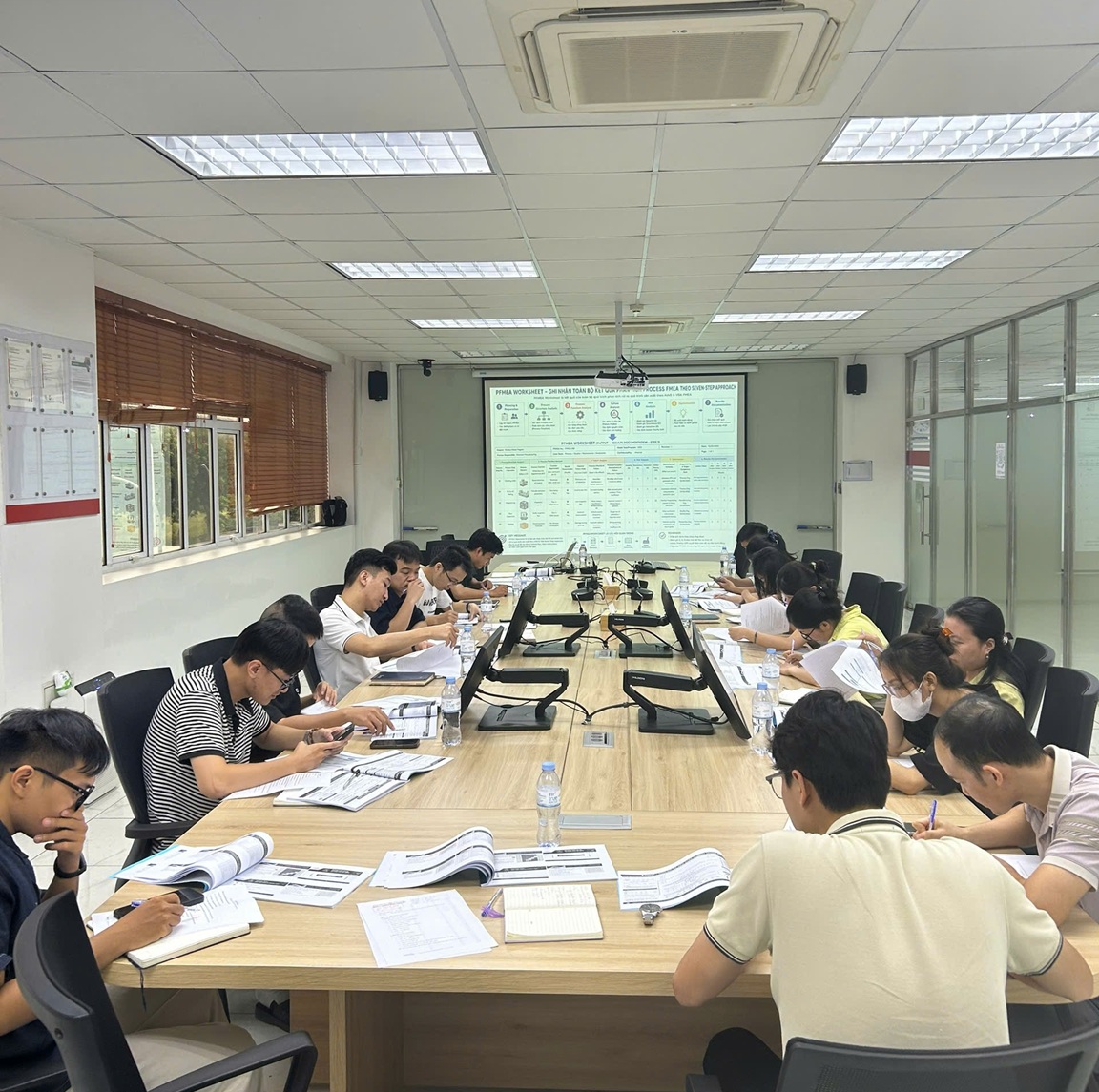
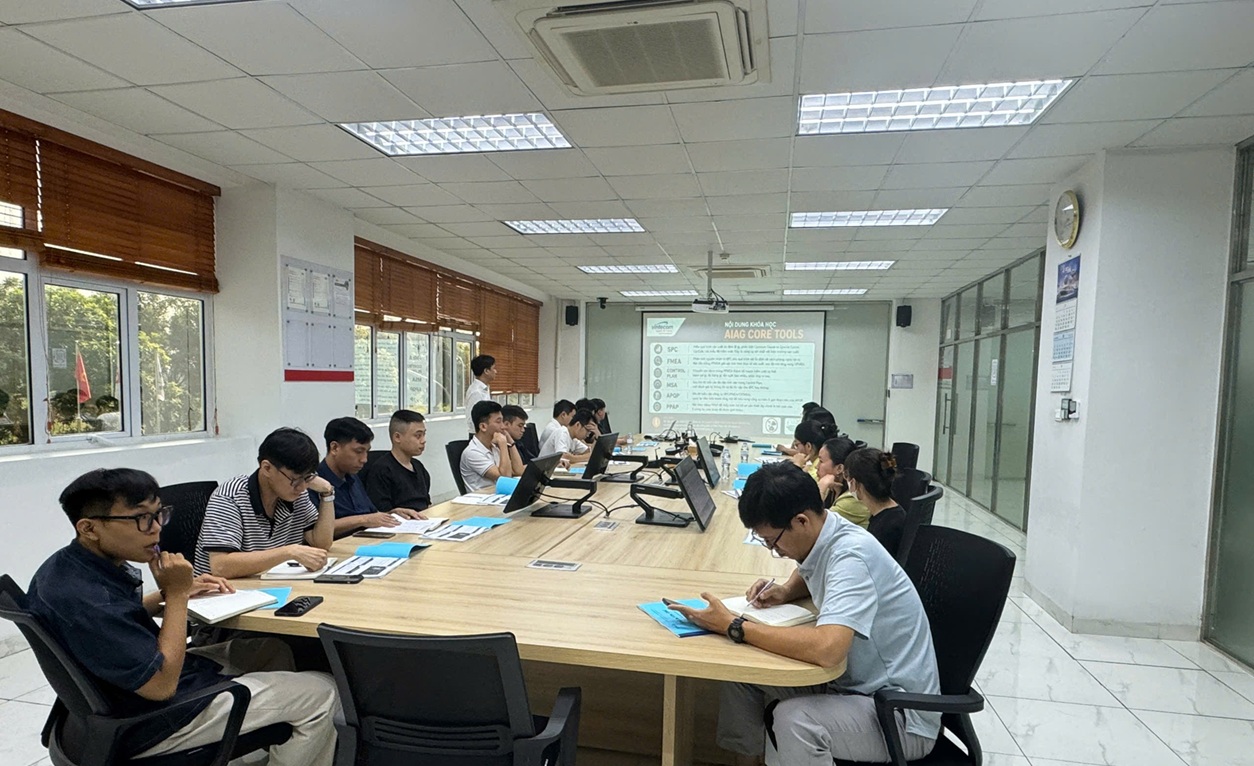 Figure 1. AIAG Core Tools Training (APQP, PPAP, FMEA, Control Plan, SPC, MSA) at DURING VIETNAM
1. APQP – Advanced Product Quality Planning
APQP provides the foundation for planning quality from the early stages of product development.
In an automotive component manufacturing environment, APQP helps an organization identify and manage:
Customer Requirements → Product Requirements → Process Requirements → Risk → Control → Validation → PPAP
For a cast component, the planning process may need to consider multiple factors simultaneously, including:
- Customer drawing and specification requirements;
- Special product characteristics;
- Materials and raw material composition;
- Mold design and casting conditions;
- Temperature, pressure, and cycle time parameters;
- Post-casting machining processes;
- Inspection and measurement methods;
- Process capability requirements;
- Traceability and change control requirements.
The key principle is that quality must be designed into the process, rather than relying solely on inspection to detect defective products after production.
2. FMEA – MOVING FROM “DEFECT DETECTION” TO “DEFECT PREVENTION”
For automotive component casting processes, FMEA plays a particularly important role in identifying potential failure modes that may occur throughout the process.
Depending on the actual product and process characteristics, the team may analyze potential risks across stages such as:
Material → Melting → Casting → Cooling → Trimming → Machining → Inspection
At each process stage, the team needs to identify:
Failure Mode → Effect → Cause → Prevention Control → Detection Control → Action
An important technical focus in modern FMEA training is not simply completing the FMEA form, but linking the results of risk analysis to the Control Plan and actual control measures implemented on the shop floor.
A risk identified in the FMEA but not reflected in the Control Plan, or without a corresponding control measure, creates a risk control gap.
3. CONTROL PLAN – TRANSFORMING RISKS INTO PRACTICAL PROCESS CONTROLS
The Control Plan provides a direct link between FMEA and daily production activities.
For automotive component manufacturing processes, the Control Plan should clearly define:
What to control → Specification → Measurement Method → Frequency → Responsibility → Reaction Plan
For example, depending on the technical requirements of a casting process, the following may need to be controlled:
- Raw material parameters;
- Temperature conditions;
- Pressure/cycle time;
- Machine parameters;
- Dimensional characteristics;
- Surface defects;
- Internal defects;
- Special characteristics;
- Inspection methods;
- Inspection frequency;
- Reaction Plan when the process becomes out of control.
A good Control Plan does not only answer the question “What should be inspected?”, but must also answer:
“What must the operator do if the process exceeds the control limits?”
This is a very important factor in moving from quality inspection to process control.
4. SPC – CONTROLLING PROCESS VARIATION
In mass production, the fact that a product is within specification does not necessarily mean that the process is well controlled.
SPC helps an organization distinguish between:
Common Cause Variation
and
Special Cause Variation
through tools such as:
- X̄-R Chart;
- X̄-S Chart;
- I-MR Chart;
- p/np Chart;
- c/u Chart;
- Process Capability;
- Cp/Cpk;
- Pp/Ppk.
In particular, for critical characteristics of automotive components, organizations need to understand the difference between:
Specification Limits ≠ Control Limits
and:
Process Stability ≠ Process Capability
A process with a high Cpk but lacking statistical stability still requires investigation of the underlying causes.
Conversely, a stable process with a low Cpk indicates that the inherent variation of the process still does not meet the technical requirements.
5. MSA – ENSURING THAT “MEASUREMENT DATA” IS RELIABLE
One of the important elements of the Core Tools is MSA – Measurement System Analysis.
In automotive component manufacturing, if the measurement system does not have sufficient capability:
SPC can be incorrect → Capability can be incorrect → Control Plan can be incorrect → PPAP can be incorrect.
Therefore, MSA should be considered a fundamental basis for the data used throughout the quality control system.
The training program focuses on concepts such as:
- Bias;
- Linearity;
- Stability;
- Repeatability;
- Reproducibility;
- Gage R&R;
- %GRR;
- Number of Distinct Categories (ndc).
In particular, participants are guided on how to evaluate Measurement Variation versus Process Variation, thereby avoiding situations where quality decisions are made based on a measurement system whose capability has not yet been demonstrated.
6. PPAP – THE FINAL EVIDENCE OF PRODUCT READINESS
PPAP is not simply the compilation of a documentation package.
PPAP is the process of demonstrating that:
The product meets design requirements and the actual production process is capable of consistently producing conforming products.
APQP identifies how quality is planned
→ FMEA identifies risks
→ Control Plan defines control methods
→ MSA validates the measurement system
→ SPC monitors process variation
→ PPAP demonstrates product/process capability and readiness.
VINTECOM INTERNATIONAL – CORE TOOLS TRAINING CONNECTED TO REAL-WORLD MANUFACTURING
VINTECOM International does not only provide training based on the theoretical content of the Core Tools. The training approach focuses on the actual process, product, and risks of each organization.
VINTECOM's training and consulting programs focus on quality management systems and automotive industry tools, including:
IATF 16949 | APQP | PPAP | FMEA | Control Plan | SPC | MSA | VDA 6.3 | VDA 6.5 | AIAG CQI | PSCR | 8D | Lean Six Sigma
VINTECOM's team of experts has practical experience in training, consulting, and assessment for FDI companies in the fields of automotive, automotive electronics, precision engineering, and supporting industries, including requirements related to IATF 16949 and Core Tools within the Hyundai/Kefico supply chain.
📶📶📶 Contact us to register for AIAG QMS Core Tools (APQP, PPAP, FMEA, CP, MSA and SPC) Training Course
Customers, organizations and enterprises require AIAG QMS Core Tools (APQP, PPAP, FMEA, CP, MSA and SPC) Training course in the Automotive Industry, please click on "Registration - Quotation" or on the right toolbar below the PC screen to receive a quotation for training, consulting and certification services.
📶📶📶 Further information, Please contact us as below:
☎ VINTECOM International Office in Ha Noi City: 16th Floor - Green Stars City, 234 Pham Van Dong Street, Phu Dien Ward, Hanoi City. Hotline 094-886-5288/ (024) 730-588-58
☎ VINTECOM International Office in Ho Chi Minh City: Glory Height Vinhome Grand Park - 88 Phuoc Thien Street, Long Binh Ward, HCM City. Hotline 0938-083-998/ (028) 7300-7588
VINTECOM INTERNATIONAL MANAGEMENT CONSULTANCY COMPANY
Head Office: No. 5 Hoang Sam treet, Nghia Do, Cau Giay district, Ha noi City
HANOI VINTECOM INTERNATIONAL OFFICE
Address: 16th Floor - Green Stars City
234 Pham Van Dong Street, Phu Dien Ward, Hanoi City
Tel : (024) 730.588.58/ (024) 730.333.86
Hotline: 094 886 5288
Skype: kd.vintecom
Email : office-hn@vintecom.com.vn
Web : www.vintecom.com.vn
HCM VINTECOM INTERNATIONAL OFFICE
Address : Glory Heights - Vinhomes Grand Park
88 Phuoc Thien Street, Long Binh Ward, Ho Chi Minh City
Contact: Ms. Pham Thu Ha
Tel: (028) 7300 7588
Hotline: 0938 083 998
Email : office-hcm@vintecom.com.vn
Web : www.vintecom.com.vn