ISO/IEC 17025 Training and Consultancy for the Development and Evaluation of Measurement Uncertainty of Gold and Precious Metals Testing Methods at PMAC JSC
Enhancing Laboratory Management Competence – Controlling the Accuracy of Measurement Results – Evaluating Measurement Uncertainty of Testing Methods
VINTECOM International has implemented an ISO/IEC 17025 training program and laboratory technical requirements management for the management team, specialists, and technical personnel of PMAC JSC, with a focus on enhancing the capability to control the quality of testing results and evaluate the performance of measurement and testing methods for gold and precious metals, in order to meet the requirements of the market and state regulatory authorities regarding transparency and quality assurance in accordance with applicable standards, technical regulations, and relevant regulations of the State Bank of Vietnam.
The program was designed to combine the requirements of ISO/IEC 17025 with practical technical issues encountered in laboratory operations, enabling participants not only to understand the requirements of the standard but also to apply them in the evaluation, validation, verification, and control of testing methods within the laboratory.
ISO/IEC 17025 – THE FOUNDATION FOR ENSURING LABORATORY COMPETENCE AND RELIABILITY
For a laboratory, having modern equipment or being capable of performing a particular test is not, by itself, sufficient to demonstrate technical competence.
What is important is that the laboratory must be able to demonstrate that:
Suitable Method → Suitable Equipment → Competent Personnel → Method Validation/Verification → Controlled Measurement System → Reliable Results → Traceable Results
ISO/IEC 17025 establishes requirements to ensure that a laboratory is competent to perform testing and calibration activities and to provide valid and reliable results.
Therefore, during the training program at PMAC, VINTECOM International placed particular emphasis on the relationship between the management requirements of ISO/IEC 17025 and the actual technical competence of the laboratory.
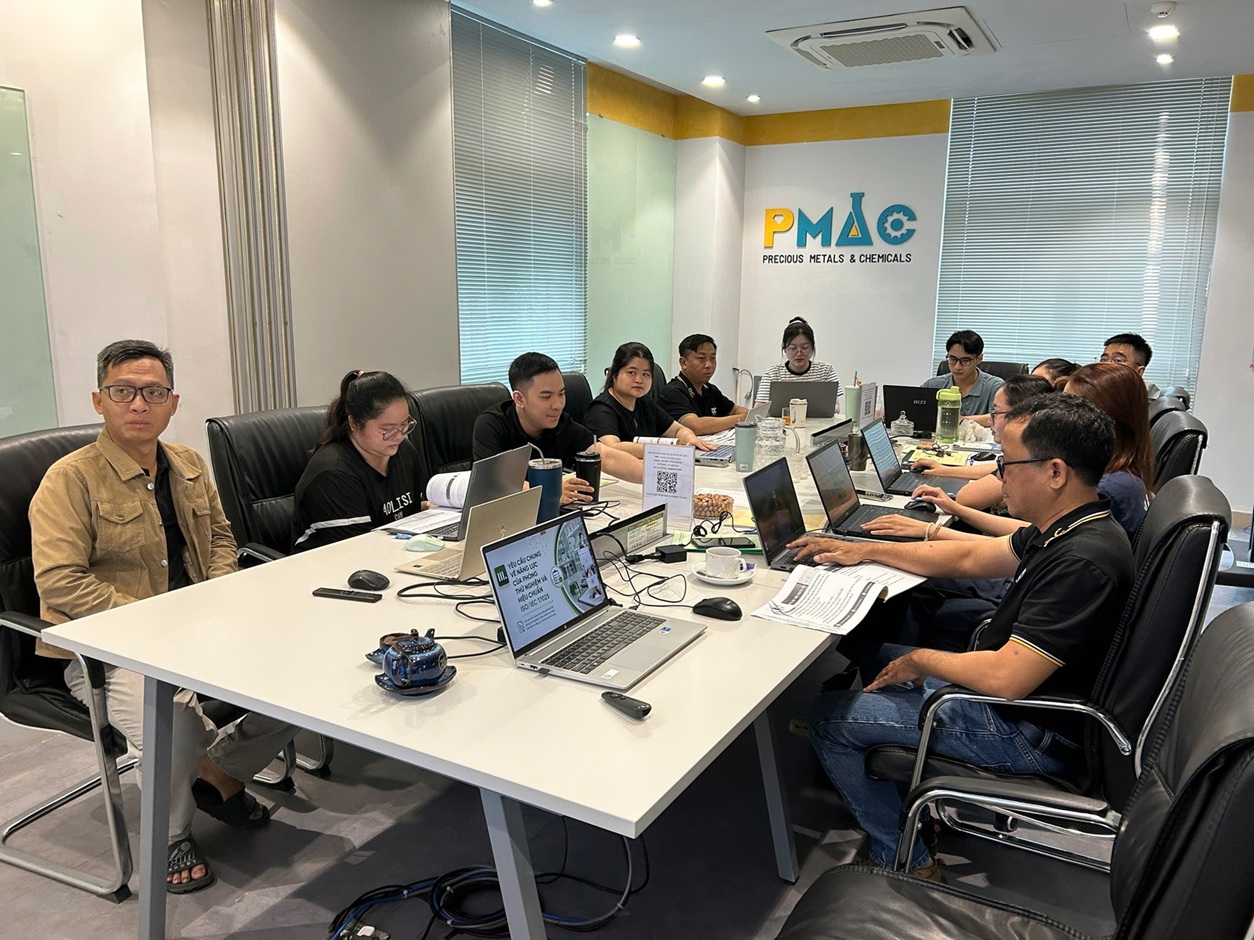
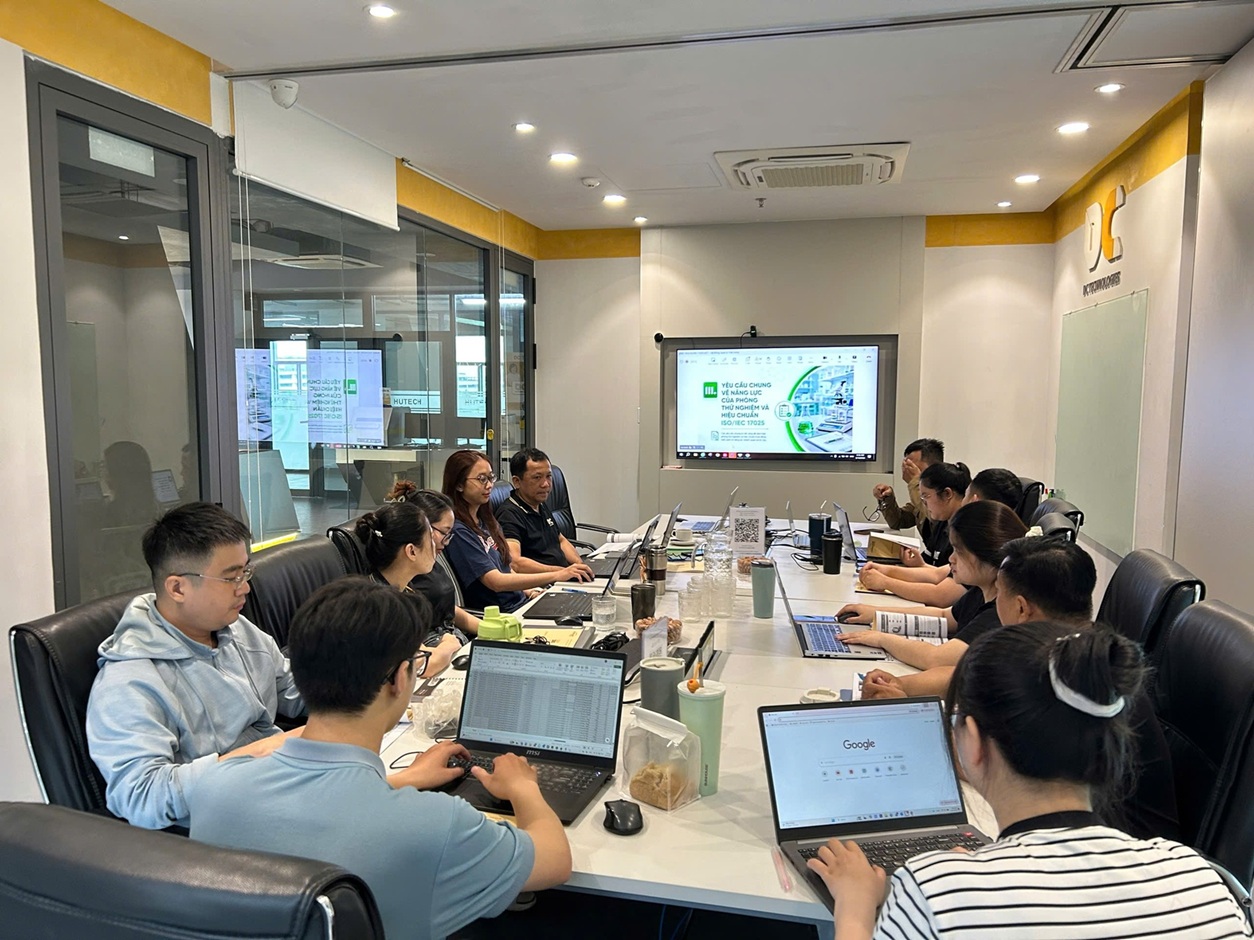
Figure 1: Training Course on Laboratory Technical Competence Management according to ISO/IEC 17025 in the field of Gold and Precious Metals Testing
MANAGEMENT OF TECHNICAL CHARACTERISTICS OF TEST METHODS
One of the key contents of the program is to help participants correctly understand and distinguish the technical concepts commonly used in evaluating the competence of measurement and testing methods.
1. Trueness
Trueness represents the degree of agreement between the average value obtained from a large number of measurement results and a reference value.
Evaluating trueness helps the laboratory determine whether the method tends to produce results that are higher or lower than the reference value.
This content is directly related to the evaluation of Bias of the method.
2. Accuracy – Precision
Precision reflects the degree of agreement between repeated measurement results under specified conditions.
Precision is not synonymous with trueness.
A method may produce results that:
- Have high precision but are biased away from the true value;
- Have good trueness but large dispersion of results;
- Or simultaneously achieve good trueness and good precision.
This is one of the points that is often misunderstood when evaluating the performance of a test method.
3. Precision
In the training program, participants conduct an in-depth analysis of method precision, including different measurement conditions.
Repeatability
Repeatability evaluates the dispersion of results when measurements are performed under relatively similar conditions:
Same method → same equipment → same operator → within a short period of time → on the same test item.
Reproducibility
Reproducibility evaluates the variation in results when the measurement conditions change to a wider extent, for example between laboratories or under the conditions specified in the method.
Distinguishing between Repeatability and Reproducibility is important for evaluating precision and the applicability of the method.
4. BIAS AND EVALUATION OF METHOD TRUENESS
Bias is one of the important parameters when evaluating method performance.
Through the use of reference materials, reference values, or appropriate evaluation methods, the laboratory can determine whether the method has a systematic bias.
A method with very good precision but large Bias may still produce results that are inconsistent with the true value or reference value.
Therefore:
Precision ≠ Trueness
and:
High Precision ≠ Accurate Result
This is a key point particularly emphasized by VINTECOM International in the training program.
5. LINEARITY
Linearity is evaluated to assess the ability of a method to maintain an appropriate relationship between the measurement result and the true value or reference value over a defined measurement range.
For quantitative analytical methods, evaluating linearity helps determine:
Concentration/value range → method response → model suitability → applicability of the method within the intended range.
This is an important basis for the laboratory to establish the applicable range of the method.
6. STANDARD DEVIATION
Standard Deviation (SD) is an important statistical parameter used to describe the degree of dispersion of measurement results around the mean value.
In method evaluation, SD can be used to:
- Evaluate the dispersion of results;
- Evaluate precision;
- Compare variation under different measurement conditions;
- Provide a basis for further statistical calculations;
- Contribute to the evaluation of measurement uncertainty.
Therefore, participants are guided not only on how to calculate SD but also on understanding the technical significance of SD in evaluating method performance.
7. MEASUREMENT UNCERTAINTY
An important component of the program is Measurement Uncertainty (MU).
A measurement result is not an absolutely exact value. The result is affected by many sources of variation and uncertainty, such as:
- Measuring equipment;
- Measurement standards;
- Resolution;
- Repeatability;
- Reproducibility;
- Operator;
- Environmental conditions;
- Test method;
- Test sample;
- Calibration;
- Other influencing sources.
Therefore, the laboratory needs to identify and evaluate the components contributing to the measurement uncertainty of the method.
It can be summarized as:
Measurement Result = Measured Value ± Measurement Uncertainty
Evaluating measurement uncertainty helps users of test results understand the level of confidence and the possible range of variation associated with the measurement result.
FROM “PERFORMING A TEST” TO “DEMONSTRATING METHOD COMPETENCE”
One of the important objectives of the training program is to help participants change their approach.
The laboratory should not only answer:
“Can we perform this test?”
but should be able to demonstrate:
“Is this method fit for its intended purpose and does it produce results with the required level of reliability?”
Therefore, method evaluation should be considered systematically:
Method → Accuracy/Trueness → Precision → Repeatability → Reproducibility → Bias → Linearity → Range → Detection/Quantification capability → Measurement Uncertainty
depending on the nature of the method and its intended use.
PMAC LABORATORY – ANALYTICAL CAPABILITY IN PRECIOUS METALS AND HIGH-TECHNOLOGY
D.C. New Technology Joint Stock Company was established in 2000 and PMAC Joint Stock Company was established in 2020 by Dr. Bui Thi Thuy Nga.
PMAC is currently a large-scale enterprise in the field of precious metals and high-technology supply in Indochina.
PMAC is the official representative of several leading global groups in the precious metals sector, such as Umicore (Germany), as well as laboratory equipment brands such as Thermo Scientific (USA).
PMAC's products, equipment, and services are supplied to major global customers such as:
Samsung | YKK | Swarovski
as well as leading organizations and enterprises in Vietnam such as:
Ministry of Natural Resources and Environment | Universities | Research Institutes | Departments of Science and Technology | PNJ | DOJI | SJC
and hundreds of customers in Vietnam, Laos, and Cambodia.
In the context of analytical, testing, and quality control activities increasingly requiring high levels of data reliability, developing technical competence for the PMAC laboratory is important to the quality of its services and its ability to meet the technical requirements of customers.
VINTECOM INTERNATIONAL – ISO/IEC 17025 TRAINING LINKED TO PRACTICAL TECHNICAL COMPETENCE
The training program at PMAC was delivered by VINTECOM International with the following orientation:
ISO/IEC 17025 → Technical Requirements → Test Method → Measurement Data → Statistical Analysis → Competence Evaluation → Reliability of Results.
Rather than focusing solely on theoretical standard requirements, VINTECOM International focuses on helping participants understand the technical nature of the requirements, thereby enabling them to apply them to the laboratory's actual activities.
The key areas emphasized include:
- ISO/IEC 17025;
- Competence and suitability of test methods;
- Method validation/verification;
- Trueness and precision;
- Precision;
- Repeatability – Repeatability;
- Reproducibility – Reproducibility;
- Bias;
- Linearity;
- Standard Deviation;
- Statistical data evaluation;
- Measurement uncertainty evaluation;
- Quality control of test results;
- Fitness for purpose of the method.
VINTECOM INTERNATIONAL – CONNECTING GLOBAL KNOWLEDGE
With the vision “Connecting Global Knowledge – Kết nối tri thức toàn cầu”, VINTECOM International provides training, consulting, and competence assessment programs based on international standards and methodologies.
For laboratory activities, VINTECOM focuses on:
ISO/IEC 17025 | Measurement Uncertainty | MSA | Statistical Analysis | Method Validation/Verification | Laboratory Quality Management
By combining standard knowledge, statistical methods, and practical technical expertise, VINTECOM International aims to help laboratories enhance their capabilities in data control, result reliability, and their ability to meet increasingly demanding technical requirements from customers, as well as the confidence of the market and state regulatory authorities in the quality of gold products and precious metals.
📶📶📶 Contact us today to register for ISO/IEC 17025:2017 laboratory accreditation training, consulting or ISTA® Transport Testing Laboratory services.
Customers, organizations and enterprises require the Training course, Consulting or Audit services of ISO/ IEC 17025 or ISTA® Transport Testing Laboratory please click on "Registration - Quotation" or on the right toolbar below the PC screen to receive a quotation for Training, Consulting and Certification services.
📶📶📶 Further information, Please contact us as below:
☎ VINTECOM International Office in Ha Noi City: 16th Floor - Green Stars City, 234 Pham Van Dong Street, Phu Dien Ward, Hanoi City. Hotline 094-886-5288/ (024) 730-588-58
☎ VINTECOM International Office in Ho Chi Minh City: Glory Height Vinhome Grand Park - 88 Phuoc Thien Street, Long Binh Ward, HCM City. Hotline 0938-083-998/ (028) 7300-7588
VINTECOM INTERNATIONAL MANAGEMENT CONSULTANCY COMPANY
Head Office: No. 5 Hoang Sam treet, Nghia Do, Cau Giay district, Ha noi City
HANOI VINTECOM INTERNATIONAL OFFICE
Address: 16th Floor - Green Stars City
234 Pham Van Dong Street, Phu Dien Ward, Hanoi City
Tel : (024) 730.588.58/ (024) 730.333.86
Hotline: 094 886 5288
Skype: kd.vintecom
Email : office-hn@vintecom.com.vn
Web : www.vintecom.com.vn
HCM VINTECOM INTERNATIONAL OFFICE
Address : Glory Heights - Vinhomes Grand Park
88 Phuoc Thien Street, Long Binh Ward, Ho Chi Minh City
Contact: Ms. Pham Thu Ha
Tel: (028) 7300 7588
Hotline: 0938 083 998
Email : office-hcm@vintecom.com.vn
Web : www.vintecom.com.vn